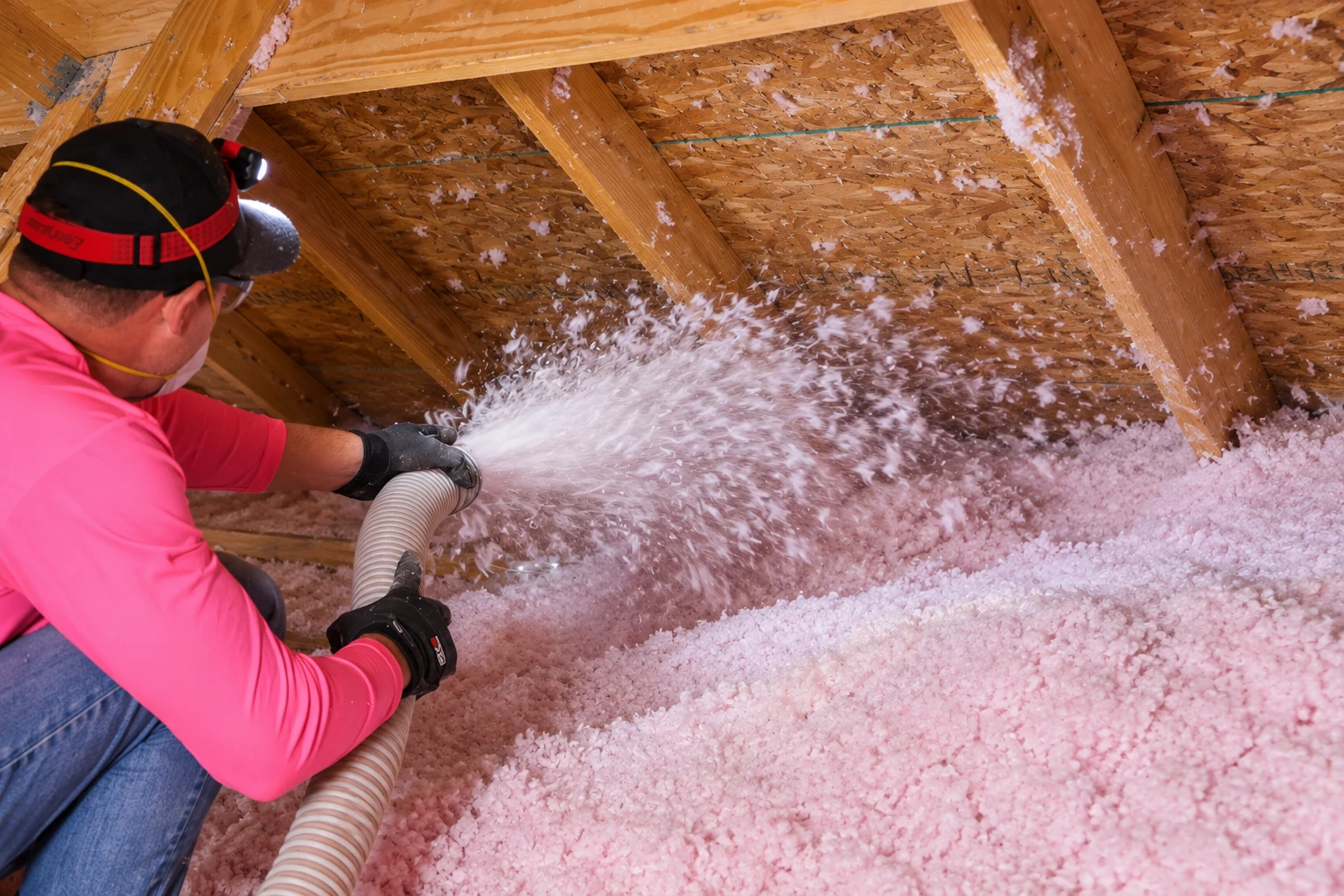
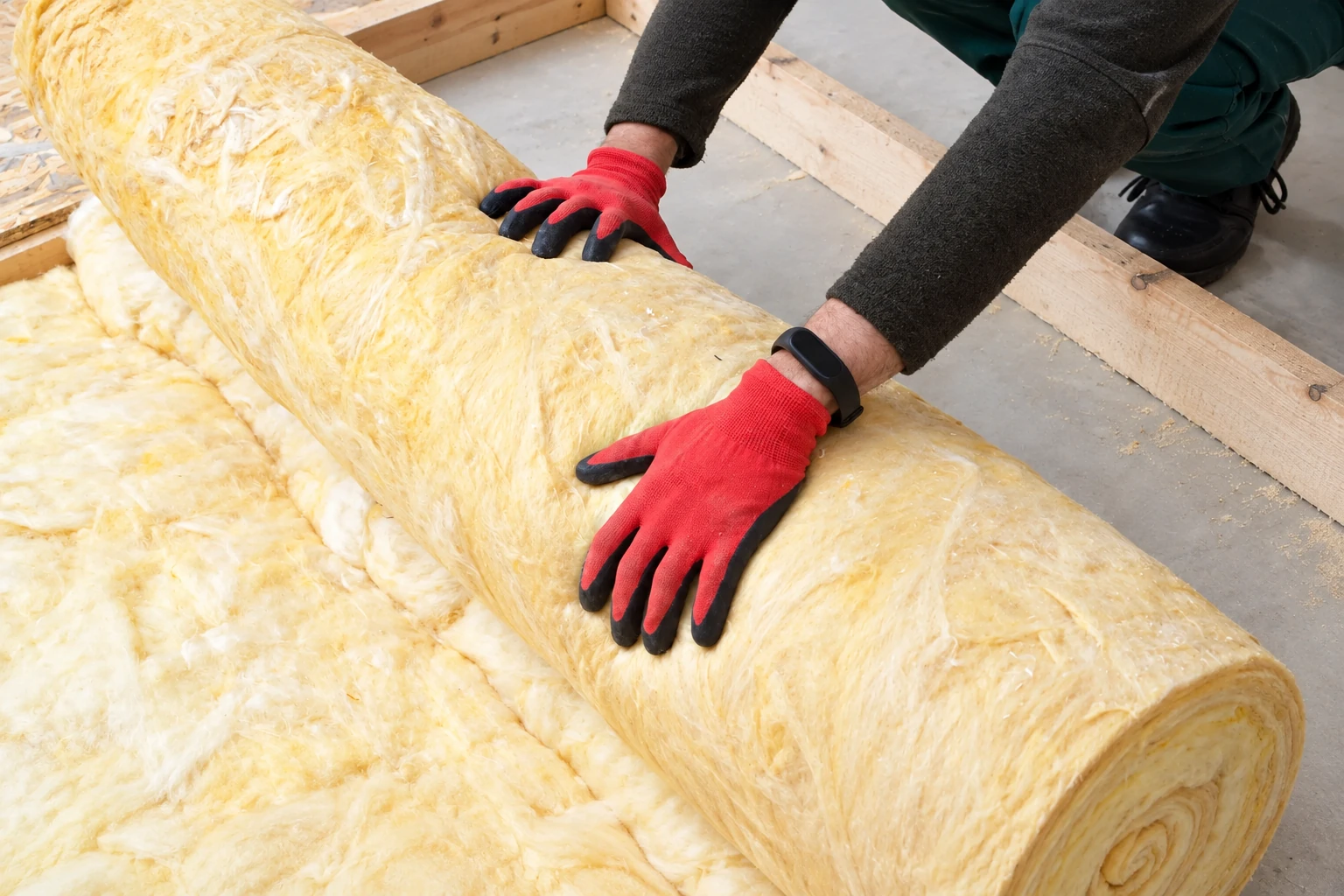
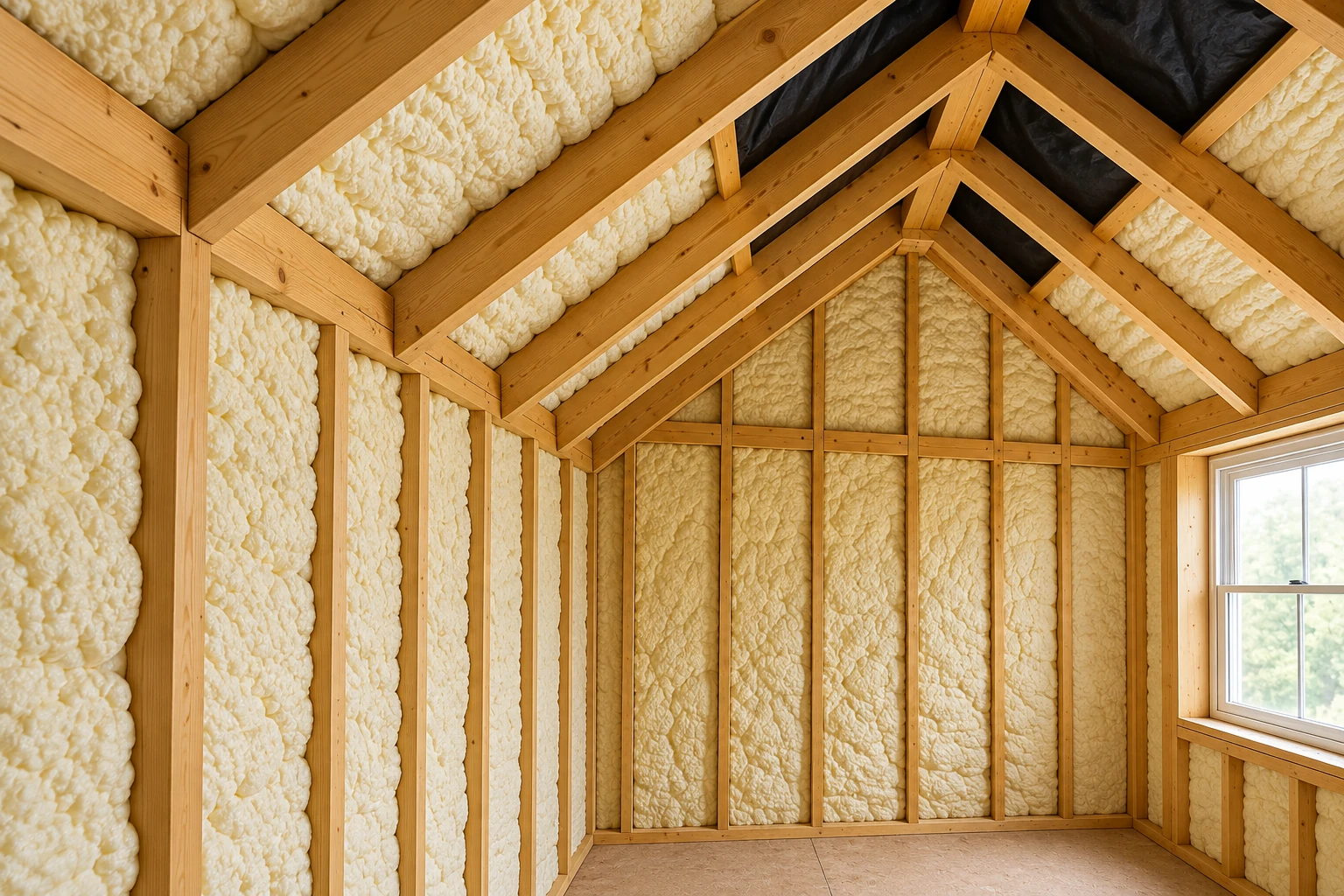
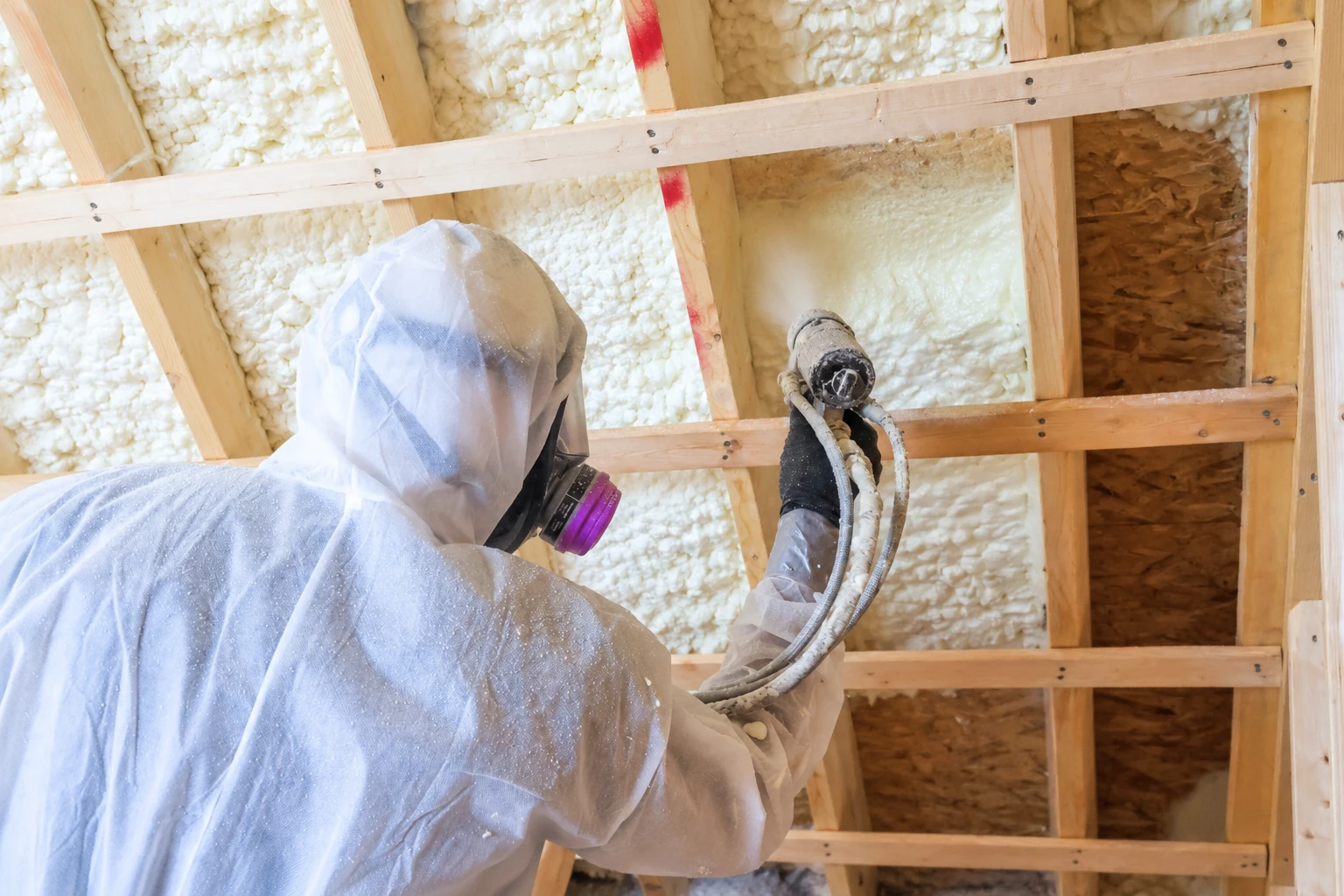
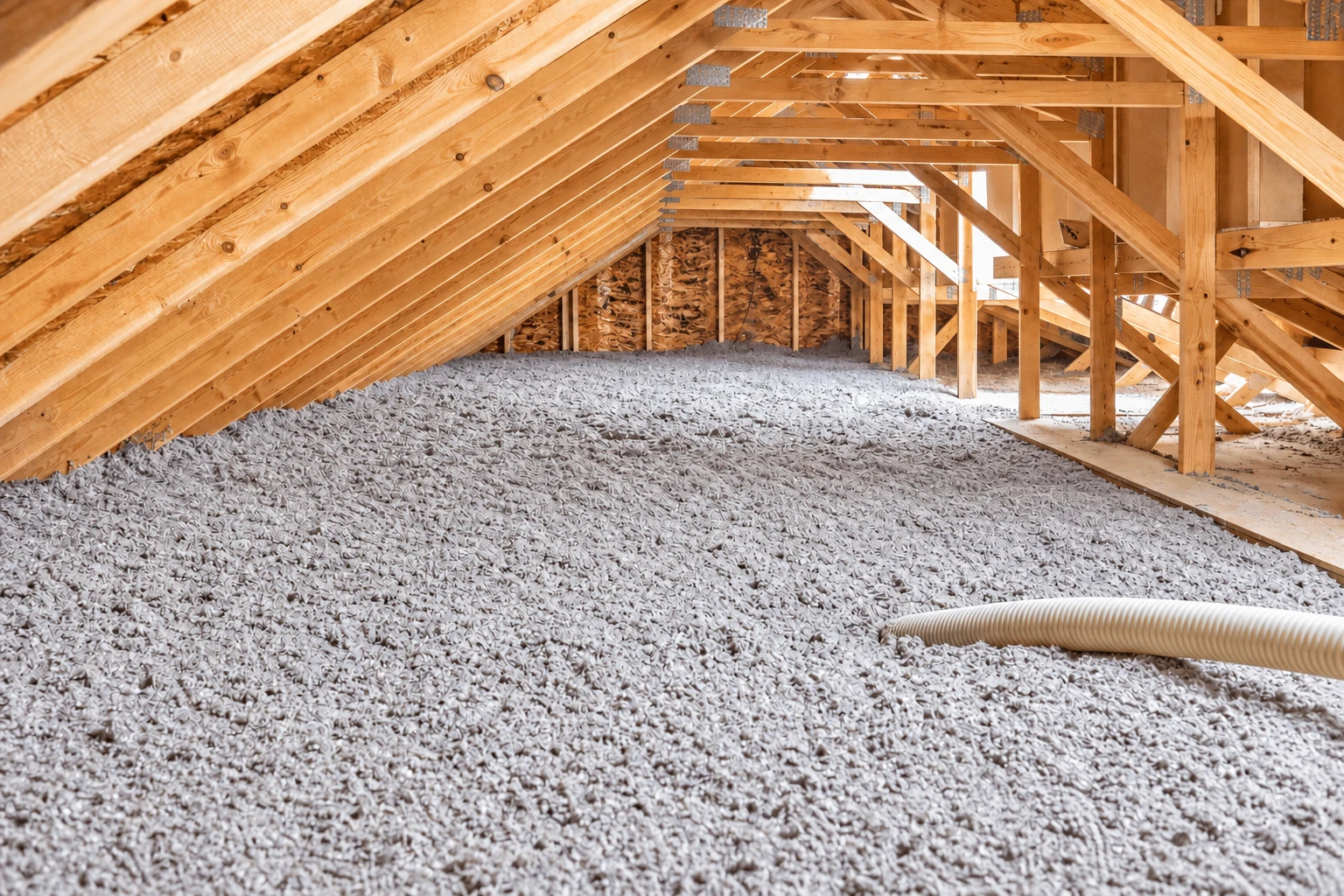
Adding insulation to a finished home starts with one decision. Either the attic stays vented, with insulation on the attic floor and the vents under the eaves and at the ridge or gable ends left working, or it gets sealed at the roof, with foam under the roof sheathing and gable walls so the ducts and air handler sit inside the insulated part of the house. Gas appliances up there can change that answer, as noted above.
I also look at how your ducts sit before we bury anything. In humid attic air, ducts covered in new insulation can collect moisture on their surface, and leaky ducts make that worse, so they get sealed and planned around instead of simply covered. When the ducts run all over the attic, spray foam insulation under the roof is often the better plan.
On a floor job, the edges matter as much as the middle. Baffles, small guards at the roof edge, keep the eave vents open so insulation can't spill in and block them, and we aim for a depth as even as we can get across the whole ceiling, because thick in the middle and thin at the edges is backward. Our attic insulation page covers that work in more detail.