
Spray foam insulation
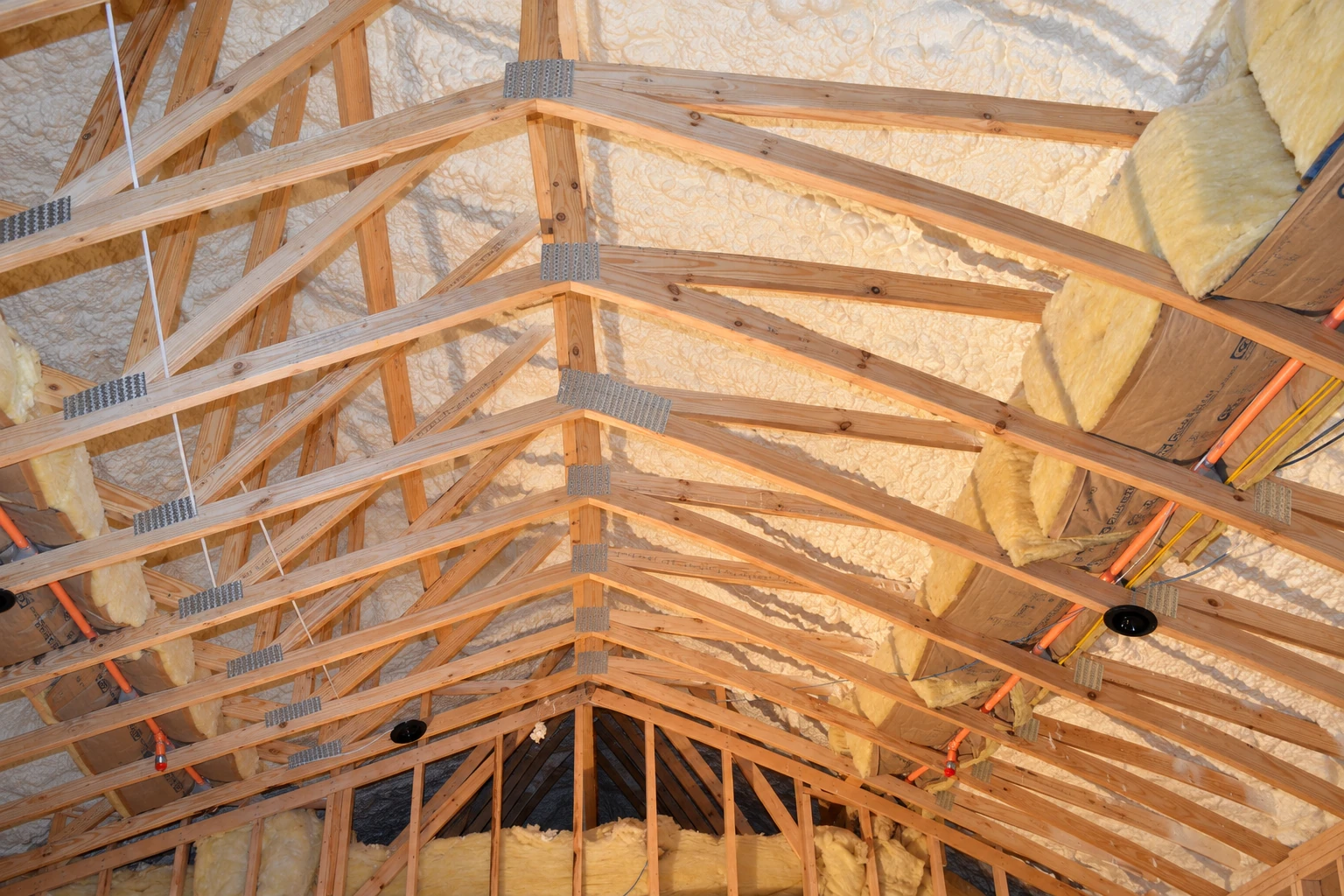
Spray foam insulates and seals air in one pass, so it fits rooflines and walls where drafts are the real problem. It costs more than loose fill, and we'll tell you plainly when it's worth it.
Lake Charles Insulation Company is an insulation contractor based in Lake Charles, LA. In Sulphur, we insulate, air seal and remove old insulation in attics, walls and crawl spaces, and we work on commercial buildings for property managers.
Sulphur calls usually start with a hot room upstairs, a drafty house or old insulation that's gone flat or wet. Lake Charles Insulation Company handles attics, walls, crawl spaces and commercial buildings here, and I look at what's actually up there before we price anything.
Sulphur jobs run from older houses with a few inches of settled insulation to newer homes where the attic was done to the minimum and the room over the garage won't cool off. Property managers also call us about offices and rental buildings in town, where the work has to fit around the people using them.
We do the same work across the cities around Lake Charles, from Sulphur east to Jennings and west to Orange, TX. The houses change, but what I check doesn't. How many inches are already up there, how tight the attic floor is and whether the ductwork runs overhead decide whether you need a top-up, a tear-out or foam.
Spray foam insulates and seals air in one pass, so it fits rooflines and walls where drafts are the real problem. It costs more than loose fill, and we'll tell you plainly when it's worth it.
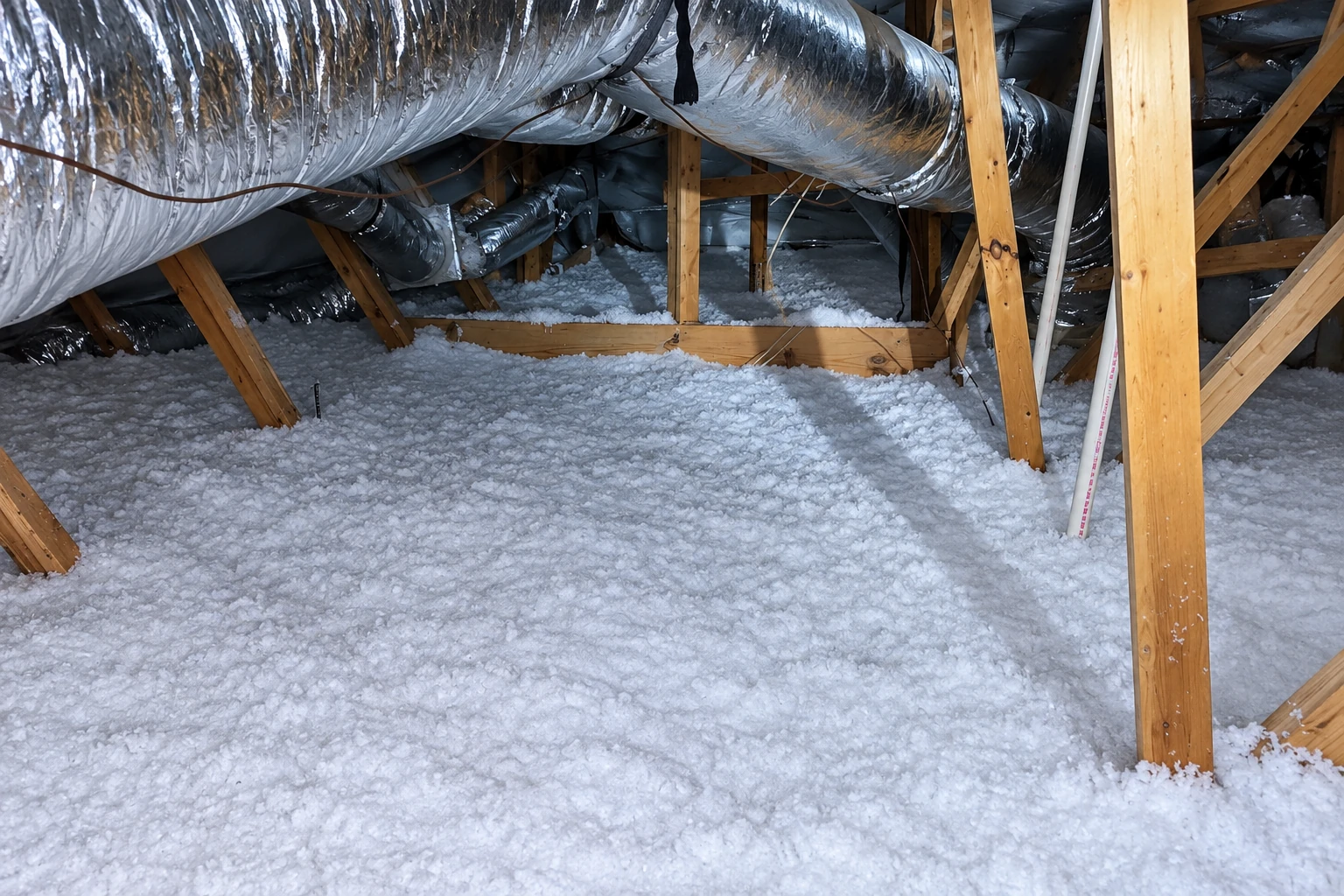
Most hot upstairs rooms in Sulphur trace back to the attic. We measure what's there, seal the gaps and bring the edges up to match the middle instead of piling it in the center.
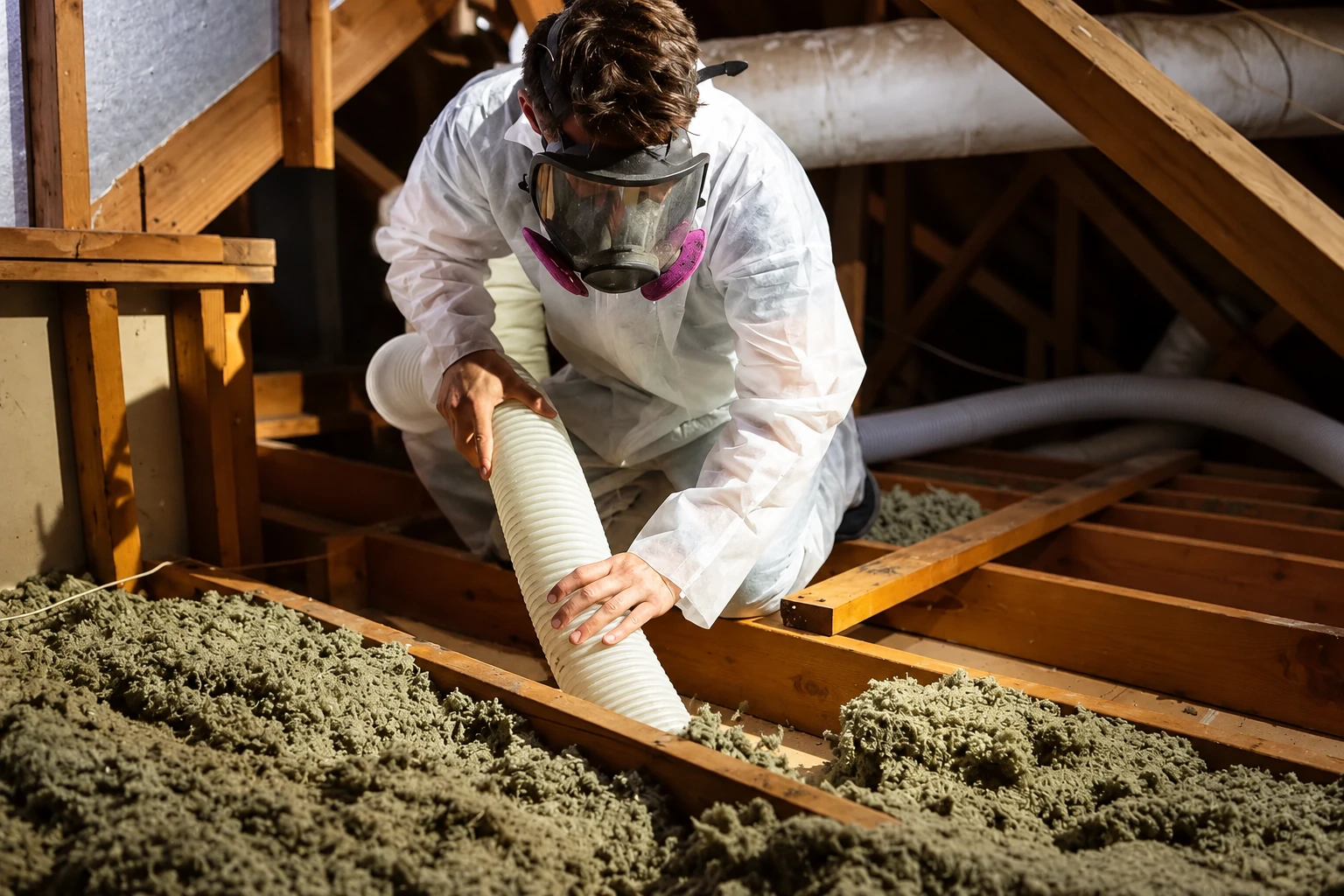
Blown-in insulation is loose fill sent through a hose. It's usually the practical way to top up an attic that already has some coverage and a hatch we can work from.
When the whole house feels drafty or the power bill keeps climbing, we look at the attic, walls and floors together and tell you which one is costing you the most.
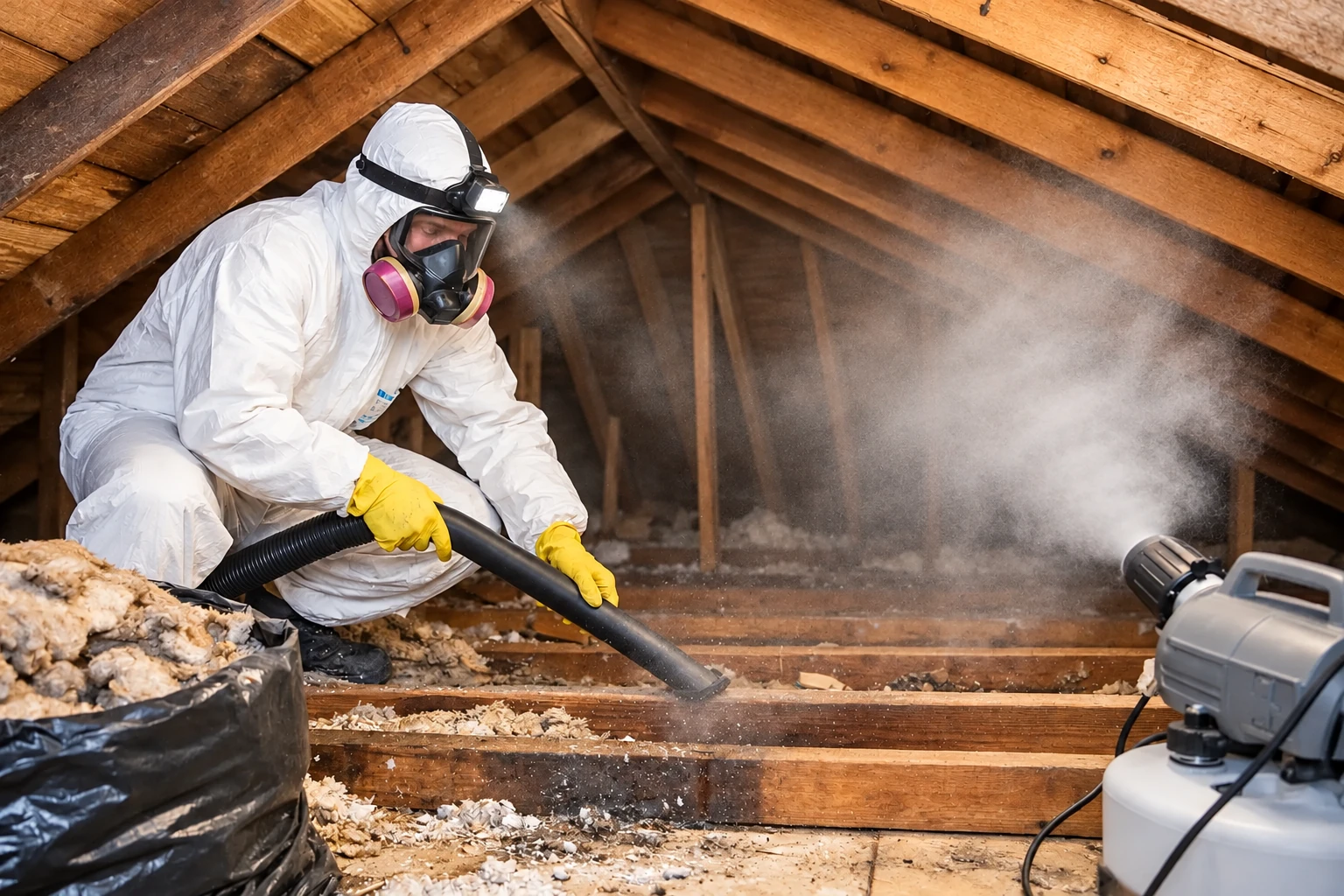
Insulation that's been soaked, matted down or filled with droppings comes out before anything new goes in, because covering it keeps the smell and moisture in your house.
Cold floors on a raised house usually mean the crawl space is open to the weather underneath. We insulate between the floor joists so the floor stops pulling heat out of the room.
Older walls are often empty or half full. We can add insulation through small holes and patch them, which helps rooms that stay hot or cold no matter where the thermostat sits.
Air sealing means closing the gaps around pipes, wires, can lights and the attic hatch so outside air stops leaking in. Insulation works better once it isn't fighting a draft.
Few houses here have basements, but where a Sulphur home or building has one, we insulate the walls with materials that handle damp concrete instead of soaking it up.
Closed-cell foam is a dense foam that also blocks moisture, so it suits crawl spaces, metal buildings and spots that sit in damp air. It's the costliest choice, so we use it where that matters.
Open-cell foam is lighter and softer and fills odd shapes well, like the sloped ceiling over a garage room. It costs less than closed-cell but doesn't stop moisture the same way.
For offices, shops and metal buildings in Sulphur, we walk the building with the property manager first and schedule the work so the business can keep running.
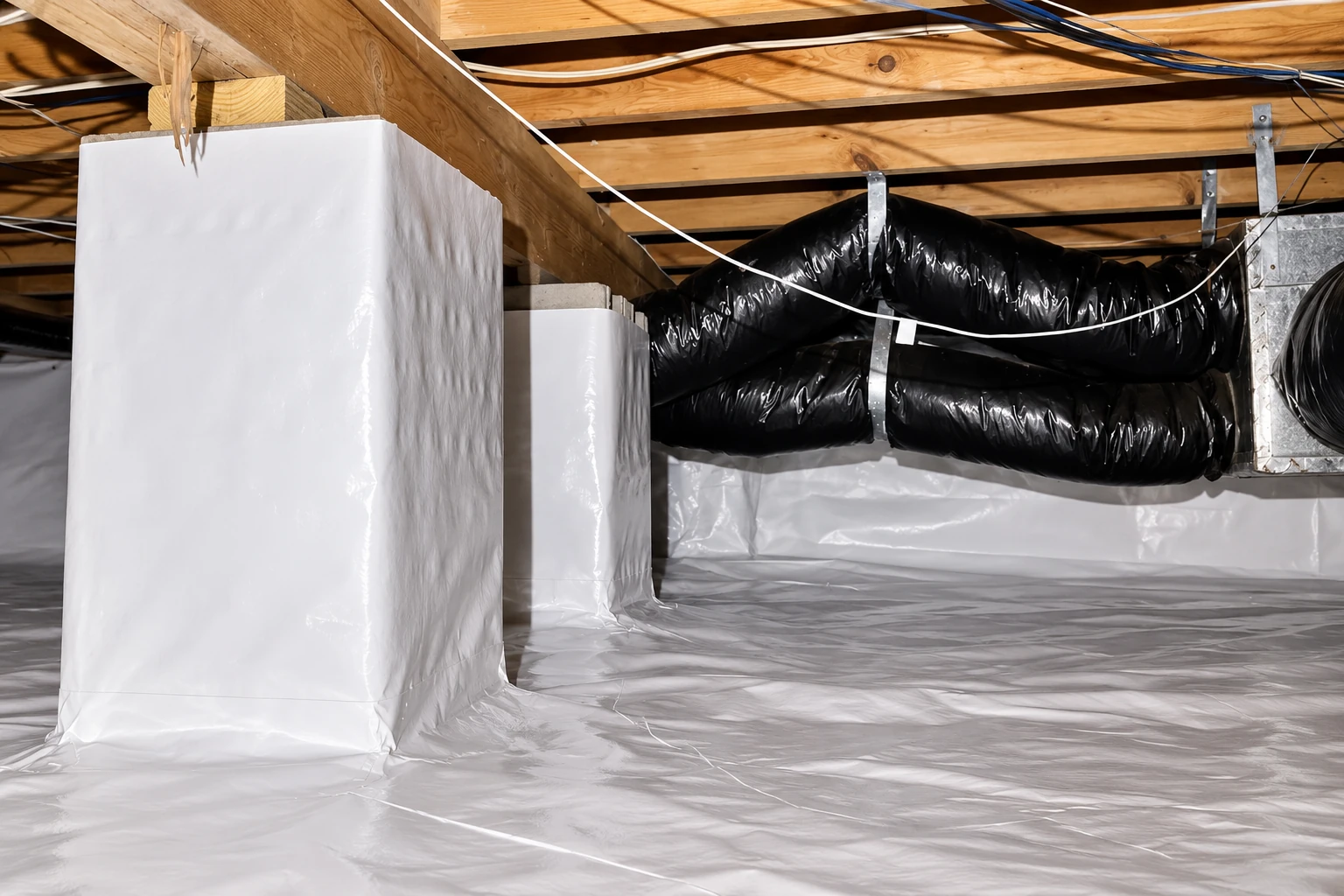
A plastic barrier over the dirt under a raised house keeps ground moisture from rising into the floor framing, and it usually belongs in before or along with crawl space insulation.
We put vapor barriers where they keep damp air off cool surfaces and leave them out where they'd trap moisture, because where it goes matters more than which roll you buy.
Before we add anything to an attic, we seal the holes from the rooms below so warm, damp air stops rising into the insulation and the framing.
For houses built with little insulation, we add it to finished attics, walls and floors without tearing the place apart, working from the access each house already has.
Send the form and we'll reply within one business day to set a time. I come out to your Sulphur home or building myself, look at the attic, walls or crawl space and write the estimate. It's free, and there's no obligation to book with us.
(337) 474-1146Inside Sulphur city limits, permits and inspections run through the city's Inspections and Permits Department. State law makes it a violation for a contractor to start before a required permit is issued, so if your job needs one, the start date waits on the city. Before you hire anyone, ask to see their state contractor's license and their Sulphur business license.
We check with the city or parish office that covers your address before work starts. If the job needs a permit, we apply for it and keep you posted, so you aren't the one chasing paperwork. It's the same routine we follow in Lake Charles and the other cities we work in.
The price moves with how much is already up there and whether it has to come out, how many gaps need sealing, how easy the attic or crawl space is to get into and whether you choose foam or loose fill. The schedule turns on the permit, if one's needed, and on clearing out old or wet material first. The estimate I write after looking gives you the number for your house.
I learned this trade on a municipal crew, where every job got written up and checked before anyone signed off, and I started this business in Lake Charles in 2023 to work the same way. I come out to look at the job and write the estimate myself. Our crew does the work, with me or a lead installer on site.
I look hard at the attic, crawl space or walls before quoting, because the worst problems are the ones that get buried under new insulation. If I see a leak, wet wood or wiring that needs a look, I show you, and we plan around it first. We're licensed and insured. Your satisfaction, guaranteed. Call (337) 474-1146 or use our form to set up a visit.
These are the conditions we plan around on Sulphur jobs. None of them is unusual for Southwest Louisiana, but each one changes what goes in the attic or under the floor.
Summer here means an attic that runs hot and damp for months while the house below works to stay cool. Thicker insulation helps, but warm, wet air still slips through gaps around can lights, pipes and the hatch. That's why we seal those first. Insulation slows the heat and sealing stops the air carrying it, so the upstairs needs both before it cools down.
Plenty of houses run the AC ducts through the attic, which puts your cold air in the hottest part of the house. That's when spray foam on the roofline earns its higher price, because it brings the ducts inside the insulated space. If the ducts aren't up there, sealing the gaps and topping up blown-in insulation usually gets you more for your money.
Raised houses with a crawl space often have cold floors in winter and damp framing the rest of the year. We check the ground for standing water and the joists for soft or stained wood before we quote, because insulation added over a moisture problem only hides it. A vapor barrier on the ground often goes in first.
After a roof leak or storm repair, the insulation underneath can stay wet or packed down without anyone noticing, and pests leave droppings in it too. We don't blow new material over that, because the smell and moisture stay. We pull it out, check the wood and keep the eave vents along the roof edge open so the attic can still breathe.
Inside Sulphur city limits, the city requires all construction work to be inspected. State law also counts skipping a required inspection as a violation for the contractor. When an inspection is part of your job, we plan the work so nothing gets covered up before it's been checked.
Yes, the city takes building permit and specialty trade permit applications completely online through its permits and licensing system. On our jobs, you usually won't need to log in yourself, since we handle the application when your job needs a permit.
There's no flat price, because the cost depends on what's already in your attic and what the house needs. Old insulation that has to come out, foam instead of loose fill and a cramped attic all push it up. A clear attic that only needs sealing and a top-up keeps it down, and the on-site estimate gives you your number.
Clear a path to the attic hatch or pull-down stairs and move anything stored right around it, because the crew needs room to work and run hoses. If boxes are stored up in the attic, we'll talk at the estimate about whether they need to come down. Keep pets in a closed room on install day.
With spray foam, plan on being out of the house during spraying and until the re-entry time, the point when it's safe to come back in, which the foam maker sets. We tell you that wait for the product we're using before the job is booked, so you can plan for kids and pets. Blown-in work usually doesn't require you to leave.
We take calls evenings and weekends, so call (337) 474-1146 after work or send the form and set a time to show me the room that won't cool off.